Exploring Insoluble Fibre
Published February 2026
What is Insoluble Fibre?
Insoluble fibre is a type of dietary fibre that does not dissolve in water. Unlike soluble fibre, it maintains its structure as it passes through the digestive system. This characteristic influences how it behaves in the body and its role in digestive processes.
Physical Properties
Insoluble fibre includes plant components such as cellulose, lignin, and some hemicelluloses. These substances have rigid molecular structures that resist breakdown by digestive enzymes. They do not form gels when mixed with water, and instead add bulk to digestive contents.
Food Sources of Insoluble Fibre
Insoluble fibre is widely distributed in plant-based foods. Recognising these sources helps understand where this fibre type appears in common diets.
Whole Grains
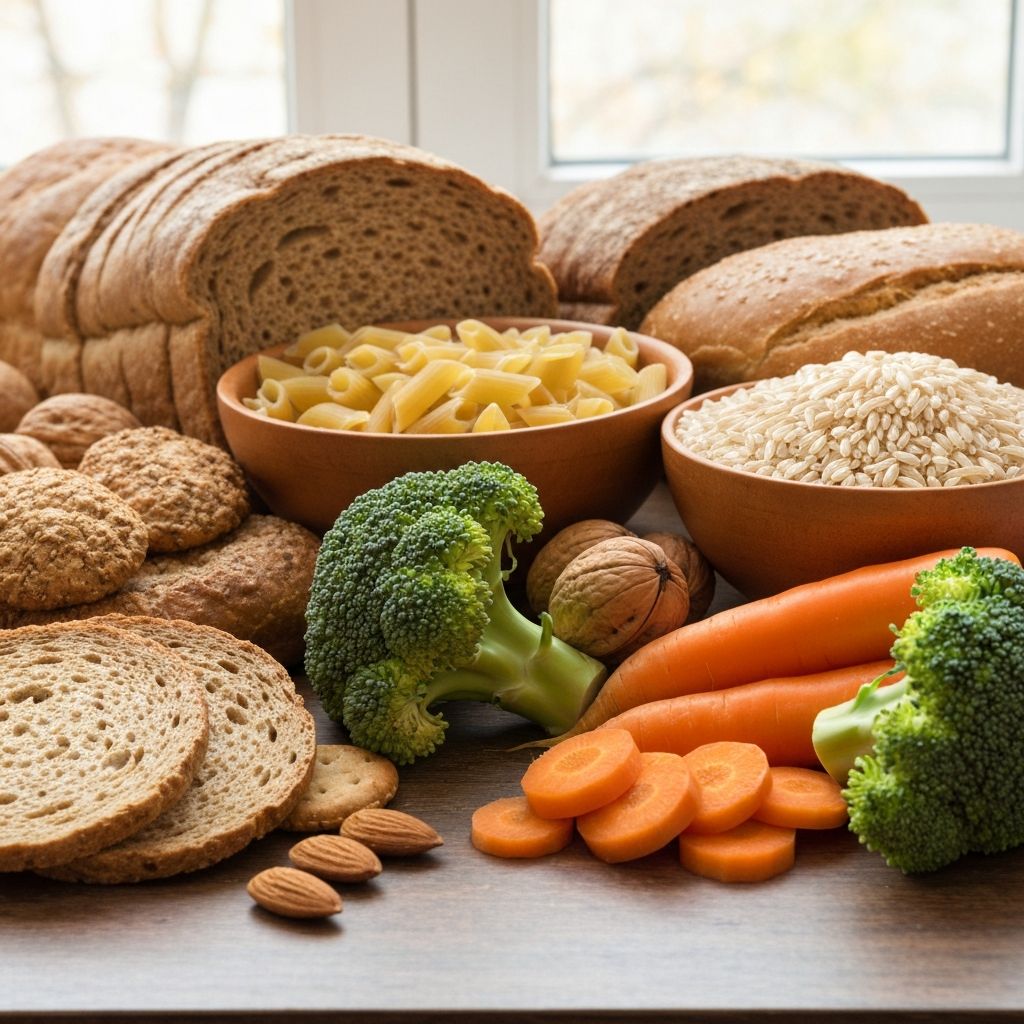
Whole wheat products, including whole wheat bread, whole wheat pasta, and wheat bran, are rich sources of insoluble fibre. Brown rice and whole grain cereals also contain significant amounts. The outer layers of grains, which are preserved in whole grain products, contain most of the insoluble fibre.
Vegetables
Many vegetables provide insoluble fibre. Dark leafy greens such as kale and spinach, cauliflower, broccoli, green beans, and the skins of root vegetables like potatoes contain this fibre type. The structural parts of vegetables, including stems and skins, are particularly rich in insoluble fibre.
Nuts and Seeds
Almonds, walnuts, flaxseeds, and sunflower seeds contain insoluble fibre alongside their other nutritional components. The outer layers and shells of these foods are particularly fibre-rich.
Fruit Skins
The skins of many fruits, including apples, pears, and stone fruits, contain insoluble fibre. While the flesh may contain more soluble fibre, the outer layers typically provide insoluble types.
How Insoluble Fibre Moves Through the Digestive System
Insoluble fibre passes through the stomach and small intestine relatively unchanged. It is not broken down by digestive enzymes and does not undergo significant absorption. This resistance to digestion means it travels through the gastrointestinal tract largely intact.
In the large intestine, insoluble fibre adds bulk to the contents. Unlike soluble fibre, it is not readily fermented by gut bacteria, though some bacterial breakdown may occur depending on the specific type of insoluble fibre and individual gut microbiome composition.
Role in Digestive Transit
The presence of insoluble fibre affects the movement of material through the digestive tract. By adding bulk and structure to digestive contents, it influences transit time. The mechanical effects of this bulk stimulate the walls of the intestines in ways that affect peristalsis, the wave-like muscle contractions that move food through the system.
Insoluble Fibre and Hydration
While insoluble fibre does not dissolve in water, it can absorb some water and swell. This water-holding capacity contributes to its bulking effect. The relationship between insoluble fibre and water content in the digestive tract is important for understanding how it functions, though responses vary individually.
Insoluble Fibre in Dietary Patterns
Insoluble fibre appears in many everyday foods and contributes to the overall texture and structure of meals. Foods rich in insoluble fibre often have a more substantial, hearty texture compared to refined alternatives. Whole grain products, for example, have different sensory properties than refined grain products partly due to their fibre content.
Like all dietary components, insoluble fibre does not act in isolation. Its effects are part of complex interactions involving overall diet composition, meal timing, hydration status, and individual digestive characteristics. Different people may respond differently to the same amount of insoluble fibre.
Comparing Soluble and Insoluble Fibre
Both types of fibre are present in plant foods, often in combination. Few foods contain only one type. Understanding the distinction helps explain why different fibre-rich foods may have varying effects, but in practice, most dietary sources provide a mixture of both types along with other nutrients.
Educational Information Only
This article provides educational information about insoluble fibre and does not constitute nutrition or medical advice. Individual responses to dietary fibre vary based on numerous factors including overall diet, hydration, activity level, and personal physiology. This content explains concepts and does not recommend specific amounts or guarantee particular outcomes. Dietary decisions should be made in consultation with qualified professionals.